
What Is YD?
Recognition of employees with measurable results and without complexity!. 🎯🔗💜🤝
Dec 11, 2025
🪜 Employee Value Proposition (EVP): How Recognition Strengthens Engagement and Culture in Companies
This guide explains how to build a strong EVP that can differentiate the company in the market and strengthen internal engagement. It brings practical examples of recognition, use of gamification, automation, flexible benefits, and alignment between culture and day-to-day practices. If you want to go deeper and learn about all the strategies, examples and good practices - check out the full post.

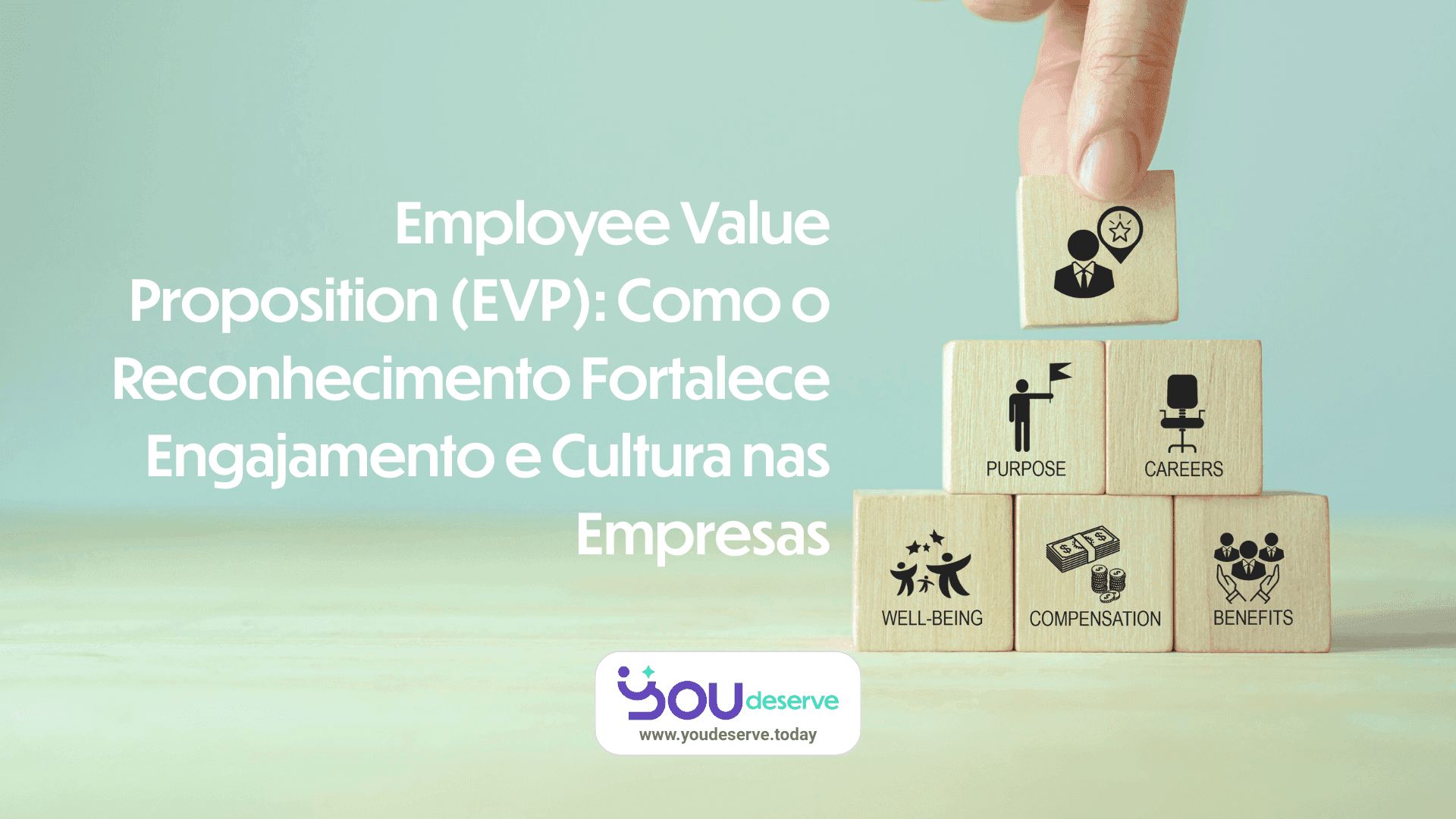
For a few years now, we have been closely following the evolution of the labor market and we have realized that many managers still underestimate the power of an employee value proposition, the famous Employee Value Proposition (EVP). In a scenario where talents have more and more options and expectations, the way a company recognizes and values its team really needs to go beyond speeches or the vague promise to "be a big family". ## What is Employee Value Proposition? Before diving into strategies, it seems essential to define the concept. Employee Value Proposition is the set of benefits, rewards, opportunities, culture, and experiences that the organization offers to its employees, in exchange for their time, talent, and dedication.
It's not just about salary. In fact, salary is only one part of the equation. The EVP establishes what differentiates your company from others in the eyes of those who work in it or want to work there. In our view, a good EVP is not only attractive to the market, but, above all, genuine for those who live the organization's routine. ## Why is the employee value proposition fundamental? We live in the era of experience, not only for the customer, but for the employee. People, more than ever, are looking for environments where they feel recognized, involved and with real opportunities for growth. When we hear stories of employees quitting even with competitive salaries, I almost always notice the absence of a strong value proposition. > Recognition is the heart of the EVP. ## The key components of the EVP
Over time, we have noticed that engagement leaders are clear about the pillars of the EVP and know how to adjust them according to the team's profile and the company's culture. For us, these are the five major blocks:
Total rewards: Salary, bonuses, profit sharing, and other financial incentives. BOLD_0 Health plans, insurance, miscellaneous aid, food vouchers, well-being, flexible benefits and even actions aimed at the balance between personal and professional life. Development opportunities: Training, mentoring, access to new projects, internal growth programs, and structured feedback. Organizational culture: Values, purpose, leadership practices, sense of belonging and coherence between discourse and actions. We learned that culture is, at the end of the day, the real retention factor. * Work environment: I'm not just talking about comfortable chairs and good coffee, but about climate, respect, psychological safety and collaboration. From time to time, the priorities of these blocks change as generations enter the market or new demands arise. And, among these elements, recognition is gaining more and more importance. ! Team gathered smiling around a table, celebrating a collective recognition
Recognition as a protagonist of the EVP
I see many managers sinning by treating recognition only as an occasional bonus, a "congratulations" hurried in the hallway or a forgotten awardee of the month plaque on a wall. What really works is to implement a culture where recognition becomes habit and is shared, beyond leadership. In our experience, recurring recognition strategies, which involve peer to peer (employees recognizing each other) and automation of celebrations, such as special dates or achievements, have a lasting effect on the feeling of belonging. > Recognizing frequently transforms work relationships. Here, platforms like YouDeserve come in, facilitating everything from the creation of virtual currencies to gamified programs that make appreciation something playful, fun and continuous. I don't know how it was before, but today I see how much it brings people together. ## How to align the EVP with the culture and employer branding? For us, a value proposition works when it authentically dialogues with the company's DNA. There's no point in creating genius benefits if they don't match who your team really is or the needs of the business. Strong employer branding is born from the EVP lived, not just communicated. We've seen cases of companies where everything seemed perfect on LinkedIn, but the internal experience was completely different, resulting in frustrated employees and above-average turnover. Keep values clear. Make room for decisions based on these premises. Send periodic surveys to monitor whether the weather matches the values and whether the EVP's promises are being fulfilled. Engage leaders in transparent communication about recognition, rewards, and opportunities. Encourage representativeness: recognition practices need to reach all teams. I would say: the more the EVP is aligned with culture and daily life, the more genuine and sustainable it will be to attract and retain talent. I even recommend consulting materials from YouDeserve's blog on organizational culture for practical insights. ## Practical examples of recognition and celebration
I want to illustrate with actions that I have seen work very well:
- Automated celebrations: Don't rely solely on the memory of leaders. Use platforms to send messages on important dates, birthdays, time in the company, completion of projects, among others. 2. Peer to peer recognition: Give autonomy so that any employee can recognize a colleague for a good practice, an exceptional result or a posture aligned with values. 3. Gamification of engagement: Implementing challenge systems, accumulation of points and virtual coins, exchangeable for benefits and experiences, makes the collective experience much more engaging. 4. Real-time dashboards: Visualizing who is being recognized and relating this information to the team's results increases the perception of fairness and transparency. ! Digital dashboard showing team recognition charts and virtual currencies
YouDeserve, for example, allows you to customize these recognition flows, adapt currencies, and create challenges that engage, promoting results connected to the development of the company's culture and objectives. ## How to diagnose and update the EVP? We've seen companies keeping old programs just for tradition, even if no one else was proud of them. The secret to a live EVP is regular diagnosis. We suggest some practices:
- Conduct climate and engagement surveys periodically. Ask about the perception of recognition, benefits, and balance. Request BOLD_1 on what can be improved. Pay attention to market benchmarks: if possible, analyze the EVP of reference companies in the segment (without, of course, copying, but to understand trends). * Hold active listening sessions with leaders and promote focus groups. The most striking thing for us is when the leadership is willing to listen to complaints and suggestions without judgment. Many good ideas of recognition were born from this. ## Clear communication: inside and outside the company
You can have incredible incentives, benefits that arouse envy, but if no one understands what exists or feels that everything is secret, nothing is useful. Transparency and clarity in the communication of the value proposition, with real examples of recognition, strengthen engagement.
We encourage the use of channels such as digital bulletin boards, newsletters, open meetings, and accessible dashboards, to give visibility to both recognition and other active benefits. This helps keep expectations aligned and reinforces employer branding. > If recognition is celebrated publicly, culture solidifies naturally. Externally, the value proposition needs to be present in the recruitment narrative: whether on websites, interviews, or selective dynamics. When I meet professionals who report having been enchanted by a selection process because of the company's recognition practices, I am sure that the EVP is being communicated effectively. ## Measuring results: worthwhile metrics
On this journey, we learned that measuring is indispensable. Some indicators help me understand if the proposal makes a difference in my daily life:
- Turnover rate (voluntary and involuntary departures). Level of BOLD_0, from recurring searches. Number of recognitions performed (by manager and peer-to-peer). Participation in flexible benefits programs. Average time for internal promotions. * Internal consultations with communication channels about benefits (if there are doubts, there is a lack of transparency). We often use YouDeserve dashboards to visualize engagement trends, recognize talent, and make quick adjustment decisions. ! Employees celebrating achievement in a modern work environment
How to seek inspiration and deepen knowledge? Basically, serving people is also a constant learning exercise. I usually research different examples and reports in corporate communities. For those who want to go further, I recommend searching within YouDeserve's own blog, using the internal search tool. You will find cases, trends and good practices of recognition and benefits. ## Conclusion
The Employee Value Proposition may seem distant or theoretical, but I realized that, when put into practice under the focus of true recognition, it takes deep roots in the company's culture. This differentiates organizations that only pass through the lives of employees from those that mark stories for generations. If you are thinking of transforming your team's climate, increasing engagement, and retaining talent, I suggest you get to know the YouDeserve platform, where recognition is simple, strategic, and measurable. Subscribe to our newsletter and feel free to explore more content aimed at team management and valuing your employees. Don't wait to value, make recognition your differential!
For a few years now, we have been closely following the evolution of the labor market and we have realized that many managers still underestimate the power of an employee value proposition, the famous Employee Value Proposition (EVP). In a scenario where talents have more and more options and expectations, the way a company recognizes and values its team really needs to go beyond speeches or the vague promise to "be a big family". ## What is Employee Value Proposition? Before diving into strategies, it seems essential to define the concept. Employee Value Proposition is the set of benefits, rewards, opportunities, culture, and experiences that the organization offers to its employees, in exchange for their time, talent, and dedication.
It's not just about salary. In fact, salary is only one part of the equation. The EVP establishes what differentiates your company from others in the eyes of those who work in it or want to work there. In our view, a good EVP is not only attractive to the market, but, above all, genuine for those who live the organization's routine. ## Why is the employee value proposition fundamental? We live in the era of experience, not only for the customer, but for the employee. People, more than ever, are looking for environments where they feel recognized, involved and with real opportunities for growth. When we hear stories of employees quitting even with competitive salaries, I almost always notice the absence of a strong value proposition. > Recognition is the heart of the EVP. ## The key components of the EVP
Over time, we have noticed that engagement leaders are clear about the pillars of the EVP and know how to adjust them according to the team's profile and the company's culture. For us, these are the five major blocks:
Total rewards: Salary, bonuses, profit sharing, and other financial incentives. BOLD_0 Health plans, insurance, miscellaneous aid, food vouchers, well-being, flexible benefits and even actions aimed at the balance between personal and professional life. Development opportunities: Training, mentoring, access to new projects, internal growth programs, and structured feedback. Organizational culture: Values, purpose, leadership practices, sense of belonging and coherence between discourse and actions. We learned that culture is, at the end of the day, the real retention factor. * Work environment: I'm not just talking about comfortable chairs and good coffee, but about climate, respect, psychological safety and collaboration. From time to time, the priorities of these blocks change as generations enter the market or new demands arise. And, among these elements, recognition is gaining more and more importance. ! Team gathered smiling around a table, celebrating a collective recognition
Recognition as a protagonist of the EVP
I see many managers sinning by treating recognition only as an occasional bonus, a "congratulations" hurried in the hallway or a forgotten awardee of the month plaque on a wall. What really works is to implement a culture where recognition becomes habit and is shared, beyond leadership. In our experience, recurring recognition strategies, which involve peer to peer (employees recognizing each other) and automation of celebrations, such as special dates or achievements, have a lasting effect on the feeling of belonging. > Recognizing frequently transforms work relationships. Here, platforms like YouDeserve come in, facilitating everything from the creation of virtual currencies to gamified programs that make appreciation something playful, fun and continuous. I don't know how it was before, but today I see how much it brings people together. ## How to align the EVP with the culture and employer branding? For us, a value proposition works when it authentically dialogues with the company's DNA. There's no point in creating genius benefits if they don't match who your team really is or the needs of the business. Strong employer branding is born from the EVP lived, not just communicated. We've seen cases of companies where everything seemed perfect on LinkedIn, but the internal experience was completely different, resulting in frustrated employees and above-average turnover. Keep values clear. Make room for decisions based on these premises. Send periodic surveys to monitor whether the weather matches the values and whether the EVP's promises are being fulfilled. Engage leaders in transparent communication about recognition, rewards, and opportunities. Encourage representativeness: recognition practices need to reach all teams. I would say: the more the EVP is aligned with culture and daily life, the more genuine and sustainable it will be to attract and retain talent. I even recommend consulting materials from YouDeserve's blog on organizational culture for practical insights. ## Practical examples of recognition and celebration
I want to illustrate with actions that I have seen work very well:
- Automated celebrations: Don't rely solely on the memory of leaders. Use platforms to send messages on important dates, birthdays, time in the company, completion of projects, among others. 2. Peer to peer recognition: Give autonomy so that any employee can recognize a colleague for a good practice, an exceptional result or a posture aligned with values. 3. Gamification of engagement: Implementing challenge systems, accumulation of points and virtual coins, exchangeable for benefits and experiences, makes the collective experience much more engaging. 4. Real-time dashboards: Visualizing who is being recognized and relating this information to the team's results increases the perception of fairness and transparency. ! Digital dashboard showing team recognition charts and virtual currencies
YouDeserve, for example, allows you to customize these recognition flows, adapt currencies, and create challenges that engage, promoting results connected to the development of the company's culture and objectives. ## How to diagnose and update the EVP? We've seen companies keeping old programs just for tradition, even if no one else was proud of them. The secret to a live EVP is regular diagnosis. We suggest some practices:
- Conduct climate and engagement surveys periodically. Ask about the perception of recognition, benefits, and balance. Request BOLD_1 on what can be improved. Pay attention to market benchmarks: if possible, analyze the EVP of reference companies in the segment (without, of course, copying, but to understand trends). * Hold active listening sessions with leaders and promote focus groups. The most striking thing for us is when the leadership is willing to listen to complaints and suggestions without judgment. Many good ideas of recognition were born from this. ## Clear communication: inside and outside the company
You can have incredible incentives, benefits that arouse envy, but if no one understands what exists or feels that everything is secret, nothing is useful. Transparency and clarity in the communication of the value proposition, with real examples of recognition, strengthen engagement.
We encourage the use of channels such as digital bulletin boards, newsletters, open meetings, and accessible dashboards, to give visibility to both recognition and other active benefits. This helps keep expectations aligned and reinforces employer branding. > If recognition is celebrated publicly, culture solidifies naturally. Externally, the value proposition needs to be present in the recruitment narrative: whether on websites, interviews, or selective dynamics. When I meet professionals who report having been enchanted by a selection process because of the company's recognition practices, I am sure that the EVP is being communicated effectively. ## Measuring results: worthwhile metrics
On this journey, we learned that measuring is indispensable. Some indicators help me understand if the proposal makes a difference in my daily life:
- Turnover rate (voluntary and involuntary departures). Level of BOLD_0, from recurring searches. Number of recognitions performed (by manager and peer-to-peer). Participation in flexible benefits programs. Average time for internal promotions. * Internal consultations with communication channels about benefits (if there are doubts, there is a lack of transparency). We often use YouDeserve dashboards to visualize engagement trends, recognize talent, and make quick adjustment decisions. ! Employees celebrating achievement in a modern work environment
How to seek inspiration and deepen knowledge? Basically, serving people is also a constant learning exercise. I usually research different examples and reports in corporate communities. For those who want to go further, I recommend searching within YouDeserve's own blog, using the internal search tool. You will find cases, trends and good practices of recognition and benefits. ## Conclusion
The Employee Value Proposition may seem distant or theoretical, but I realized that, when put into practice under the focus of true recognition, it takes deep roots in the company's culture. This differentiates organizations that only pass through the lives of employees from those that mark stories for generations. If you are thinking of transforming your team's climate, increasing engagement, and retaining talent, I suggest you get to know the YouDeserve platform, where recognition is simple, strategic, and measurable. Subscribe to our newsletter and feel free to explore more content aimed at team management and valuing your employees. Don't wait to value, make recognition your differential!
For a few years now, we have been closely following the evolution of the labor market and we have realized that many managers still underestimate the power of an employee value proposition, the famous Employee Value Proposition (EVP). In a scenario where talents have more and more options and expectations, the way a company recognizes and values its team really needs to go beyond speeches or the vague promise to "be a big family". ## What is Employee Value Proposition? Before diving into strategies, it seems essential to define the concept. Employee Value Proposition is the set of benefits, rewards, opportunities, culture, and experiences that the organization offers to its employees, in exchange for their time, talent, and dedication.
It's not just about salary. In fact, salary is only one part of the equation. The EVP establishes what differentiates your company from others in the eyes of those who work in it or want to work there. In our view, a good EVP is not only attractive to the market, but, above all, genuine for those who live the organization's routine. ## Why is the employee value proposition fundamental? We live in the era of experience, not only for the customer, but for the employee. People, more than ever, are looking for environments where they feel recognized, involved and with real opportunities for growth. When we hear stories of employees quitting even with competitive salaries, I almost always notice the absence of a strong value proposition. > Recognition is the heart of the EVP. ## The key components of the EVP
Over time, we have noticed that engagement leaders are clear about the pillars of the EVP and know how to adjust them according to the team's profile and the company's culture. For us, these are the five major blocks:
Total rewards: Salary, bonuses, profit sharing, and other financial incentives. BOLD_0 Health plans, insurance, miscellaneous aid, food vouchers, well-being, flexible benefits and even actions aimed at the balance between personal and professional life. Development opportunities: Training, mentoring, access to new projects, internal growth programs, and structured feedback. Organizational culture: Values, purpose, leadership practices, sense of belonging and coherence between discourse and actions. We learned that culture is, at the end of the day, the real retention factor. * Work environment: I'm not just talking about comfortable chairs and good coffee, but about climate, respect, psychological safety and collaboration. From time to time, the priorities of these blocks change as generations enter the market or new demands arise. And, among these elements, recognition is gaining more and more importance. ! Team gathered smiling around a table, celebrating a collective recognition
Recognition as a protagonist of the EVP
I see many managers sinning by treating recognition only as an occasional bonus, a "congratulations" hurried in the hallway or a forgotten awardee of the month plaque on a wall. What really works is to implement a culture where recognition becomes habit and is shared, beyond leadership. In our experience, recurring recognition strategies, which involve peer to peer (employees recognizing each other) and automation of celebrations, such as special dates or achievements, have a lasting effect on the feeling of belonging. > Recognizing frequently transforms work relationships. Here, platforms like YouDeserve come in, facilitating everything from the creation of virtual currencies to gamified programs that make appreciation something playful, fun and continuous. I don't know how it was before, but today I see how much it brings people together. ## How to align the EVP with the culture and employer branding? For us, a value proposition works when it authentically dialogues with the company's DNA. There's no point in creating genius benefits if they don't match who your team really is or the needs of the business. Strong employer branding is born from the EVP lived, not just communicated. We've seen cases of companies where everything seemed perfect on LinkedIn, but the internal experience was completely different, resulting in frustrated employees and above-average turnover. Keep values clear. Make room for decisions based on these premises. Send periodic surveys to monitor whether the weather matches the values and whether the EVP's promises are being fulfilled. Engage leaders in transparent communication about recognition, rewards, and opportunities. Encourage representativeness: recognition practices need to reach all teams. I would say: the more the EVP is aligned with culture and daily life, the more genuine and sustainable it will be to attract and retain talent. I even recommend consulting materials from YouDeserve's blog on organizational culture for practical insights. ## Practical examples of recognition and celebration
I want to illustrate with actions that I have seen work very well:
- Automated celebrations: Don't rely solely on the memory of leaders. Use platforms to send messages on important dates, birthdays, time in the company, completion of projects, among others. 2. Peer to peer recognition: Give autonomy so that any employee can recognize a colleague for a good practice, an exceptional result or a posture aligned with values. 3. Gamification of engagement: Implementing challenge systems, accumulation of points and virtual coins, exchangeable for benefits and experiences, makes the collective experience much more engaging. 4. Real-time dashboards: Visualizing who is being recognized and relating this information to the team's results increases the perception of fairness and transparency. ! Digital dashboard showing team recognition charts and virtual currencies
YouDeserve, for example, allows you to customize these recognition flows, adapt currencies, and create challenges that engage, promoting results connected to the development of the company's culture and objectives. ## How to diagnose and update the EVP? We've seen companies keeping old programs just for tradition, even if no one else was proud of them. The secret to a live EVP is regular diagnosis. We suggest some practices:
- Conduct climate and engagement surveys periodically. Ask about the perception of recognition, benefits, and balance. Request BOLD_1 on what can be improved. Pay attention to market benchmarks: if possible, analyze the EVP of reference companies in the segment (without, of course, copying, but to understand trends). * Hold active listening sessions with leaders and promote focus groups. The most striking thing for us is when the leadership is willing to listen to complaints and suggestions without judgment. Many good ideas of recognition were born from this. ## Clear communication: inside and outside the company
You can have incredible incentives, benefits that arouse envy, but if no one understands what exists or feels that everything is secret, nothing is useful. Transparency and clarity in the communication of the value proposition, with real examples of recognition, strengthen engagement.
We encourage the use of channels such as digital bulletin boards, newsletters, open meetings, and accessible dashboards, to give visibility to both recognition and other active benefits. This helps keep expectations aligned and reinforces employer branding. > If recognition is celebrated publicly, culture solidifies naturally. Externally, the value proposition needs to be present in the recruitment narrative: whether on websites, interviews, or selective dynamics. When I meet professionals who report having been enchanted by a selection process because of the company's recognition practices, I am sure that the EVP is being communicated effectively. ## Measuring results: worthwhile metrics
On this journey, we learned that measuring is indispensable. Some indicators help me understand if the proposal makes a difference in my daily life:
- Turnover rate (voluntary and involuntary departures). Level of BOLD_0, from recurring searches. Number of recognitions performed (by manager and peer-to-peer). Participation in flexible benefits programs. Average time for internal promotions. * Internal consultations with communication channels about benefits (if there are doubts, there is a lack of transparency). We often use YouDeserve dashboards to visualize engagement trends, recognize talent, and make quick adjustment decisions. ! Employees celebrating achievement in a modern work environment
How to seek inspiration and deepen knowledge? Basically, serving people is also a constant learning exercise. I usually research different examples and reports in corporate communities. For those who want to go further, I recommend searching within YouDeserve's own blog, using the internal search tool. You will find cases, trends and good practices of recognition and benefits. ## Conclusion
The Employee Value Proposition may seem distant or theoretical, but I realized that, when put into practice under the focus of true recognition, it takes deep roots in the company's culture. This differentiates organizations that only pass through the lives of employees from those that mark stories for generations. If you are thinking of transforming your team's climate, increasing engagement, and retaining talent, I suggest you get to know the YouDeserve platform, where recognition is simple, strategic, and measurable. Subscribe to our newsletter and feel free to explore more content aimed at team management and valuing your employees. Don't wait to value, make recognition your differential!
Read more articles



Subscribe to our newsletter on Substack and receive news about Management 3.0 and YD!
Subscribe to our newsletter on Substack and receive news about Management 3.0 and YD!
Subscribe to our newsletter on Substack and receive news about Management 3.0 and YD!
Subscribe to our newsletter on Substack and receive news about Management 3.0 and YD!


© 2021 - 2025 YouDeserve. All rights reserved | Made with ♥ in Lages.
© 2021 - 2025 YouDeserve. All rights reserved | Made with ♥ in Lages.
© 2021 - 2025 YouDeserve. All rights reserved | Made with ♥ in Lages.
© 2021 - 2025 YouDeserve. All rights reserved | Made with ♥ in Lages.