
What Is YD?
Recognition of employees with measurable results and without complexity!. 🎯🔗💜🤝
Nov 12, 2025
🧩 Peer-to-Peer Recognition: A Practical Guide to Engaging and Valuing Teams
Small attitudes transform teams! Find out how peer-to-peer recognition can increase engagement, strengthen culture, and reduce turnover in your company. 💡 Read YouDeserve's how-to guide and learn how to implement an authentic, ongoing recognition program.

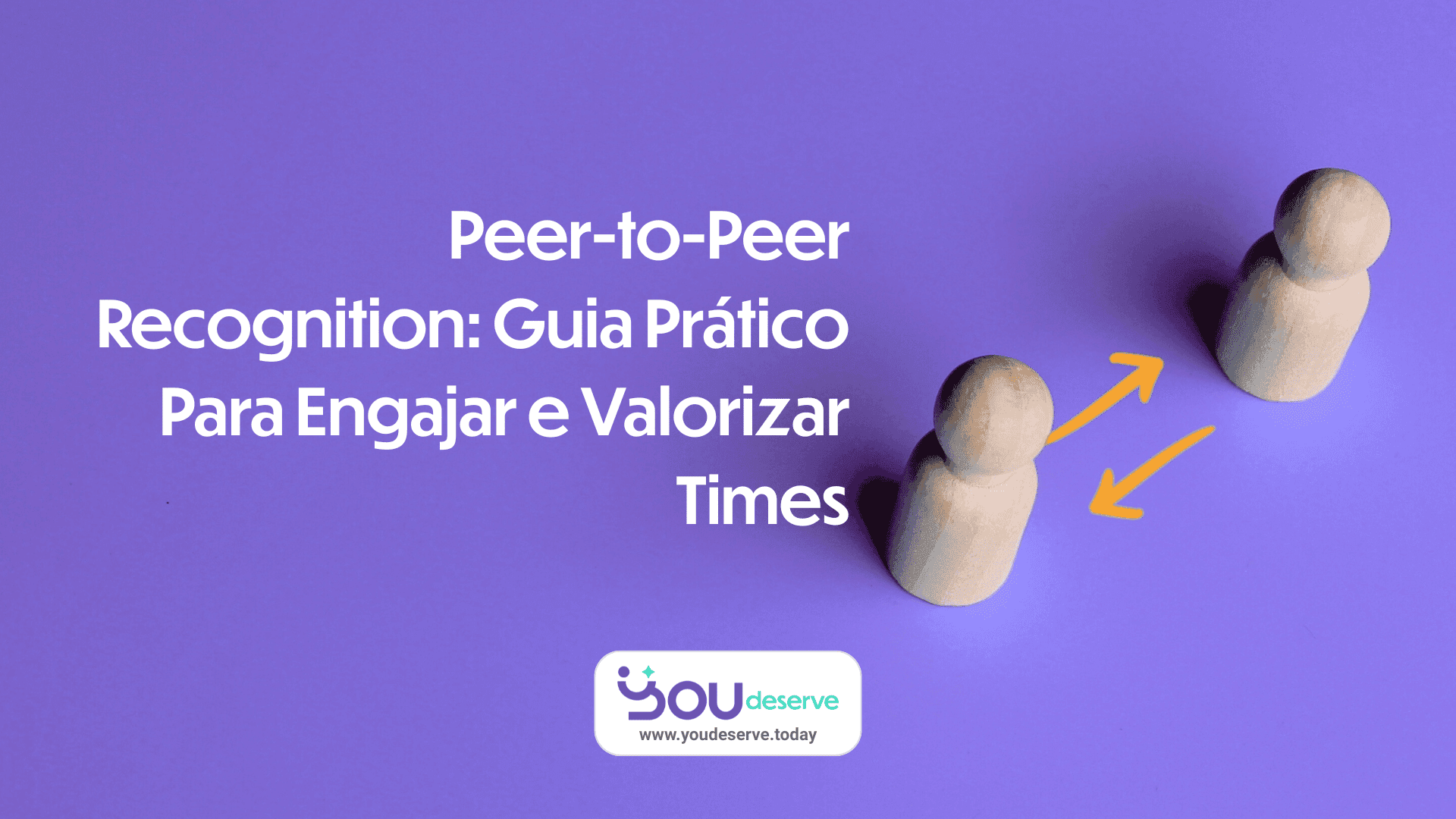
Peer-to-Peer Recognition: A Practical Guide to Engaging and Valuing Teams
Throughout my years in the job market, I realized that small attitudes transform an environment. And one of these activities was, without a doubt, the practice of mutual recognition between colleagues, known internationally as Peer-to-Peer Recognition. The first times I saw this type of recognition being practiced, always in a shy way and pulled by a leader, I always saw a change in behavior and engagement. I understood that recognition engages and, at YouDeserve, we have practical examples and applicable ways for you to implement or reinvent peer recognition in your team. We will go through human factors, digital tools, how to measure results and, above all, how to make this culture really authentic in daily practice. ## 💡 What is peer recognition and why does it work? When it comes to internal appreciation, most still associate it with recognition coming from direct leadership. However, with the new generations and the search for horizontal relationships, the value of being recognized by colleagues — who share the daily challenges — has become one of the biggest drivers of engagement in companies. > Being seen and valued by one's peers fosters belonging and mutual respect. Peer-to-peer recognition transforms working relationships into real connections of trust and collaboration. Unlike traditional systems, there are no hierarchical barriers here—anyone can recognize another colleague's work, behavior, or positive attitude.
- Reduces hierarchical barriers and brings professionals closer together. - Makes recognition more frequent, since it comes from all sides. - Recognizes small everyday attitudes, not just big achievements. - Promotes a climate of mutual support. - Encourages behaviors aligned with the company's values. At YouDeserve, I see how this process can be systematized and enhanced through a gamified tool, which connects spontaneous feedback, automatic celebrations, and personalized rewards. It is not about rewarding for the sake of rewarding, but creating a culture where recognizing the other is part of the team's daily life. ## 🌟 The direct benefits of peer recognition
In companies that adopt peer to peer recognition, I notice changes quickly. And they are not just perceptions or "sensations": internal data and indicators usually prove it. ! [](https://framerusercontent.com/images/202DeQAE2GBVoFKw6hw7O6BRdM8.png?width=1216&height=640)
Spontaneous recognition by colleagues positively affects engagement, motivation, organizational climate, and even turnover indicators. I will list five practical consequences that I witnessed:
- More engagement: Professionals feel that their effort is noticed by those who really experience the challenges of everyday life. 2. Constant feedback: the learning cycle accelerates, since everyone gives and receives feedback in a light and practical way. 3. Collaborative environment: people start to root for and genuinely help each other, because they know that recognition is not a zero-sum game. 4. Fewer conflicts: Transparent relationships reduce misunderstandings and create more human bonds. 5. High retention: Professionals who feel recognized are less resistant to voluntary turnover when they perceive value and meaning in their work. I've seen scenarios where overworked but mutually recognized teams have maintained energy and motivation through difficult periods. It's not about ignoring challenges, but about making the journey lighter and more rewarding. ## 🔗 Recognition that connects to the company's values
When recognition is linked to the values that guide the company, it gains transformative strength. It is not enough to praise a job well done. It is necessary to mention the value that was practiced.
- For example, if collaboration is a key value, recognizing a colleague who was willing to help with someone else's project reinforces this behavior for everyone. - When the company values innovation, celebrating the colleague who suggested a small improvement shows that every action counts. By integrating values into the recognition system — whether digital, physical or in meetings — culture is strengthened because the meaning of the gesture goes beyond the praise itself. You start to create a collective narrative, where everyone contributes to the same end. > Recognizing is, in essence, a way of saying: "we are on the right path, together". On the YouDeserve platform, companies usually customize recognition categories, linking each one to an institutional value, which makes the act much more strategic and targeted. ## 🧩 Practical examples of peer recognition
! [](https://framerusercontent.com/images/LavGREVqCimFlWFIEnVxM0rWBc.png?width=1216&height=640)
It is common to think that recognition is just a "thank you". But, in the experience we have at YouDeserve, we see that the best initiatives are, in fact, public, frequent and aligned with the team's profile. - Digital or physical wall: A bulletin board where anyone can record small victories or inspiring attitudes of colleagues. - Recognition in weekly meetings: Set aside a few minutes of the meeting to share positive attitudes observed in the team. - Instant messaging: Create specific channels for praise and celebrations on communication platforms already used by the group. - Virtual currencies: Programs in which each employee can send "coins" or points to colleagues for specific recognitions, then convert them into small prizes. - Inspiring stories: monthly publication of the examples that had the most impact, recognizing attitudes invisible to the eyes of leadership. - Anonymous recognition: Enabling everyone to have a voice, especially those who are more reserved, through systems with optional anonymity. I believe that no initiative is valuable if it is not frequent. Peer to peer recognition needs to be a habit, not just an annual event or "holiday party thing". ## 🧭 How to mature and make recognition among colleagues authentic? Authenticity is at the heart of this kind of recognition. After all, no one likes flattery or generic compliments. - Specify the behavior: Say exactly what was done and why it was special. Example: "I want to thank Jane for her kindness in reviewing my report on time. He saved the customer!"
- Recognize attitudes, not just results: Sometimes effort is worth as much as success. - Give space for everyone to recognize: Don't leave it to the most extroverted. Digital tools help democratize access. The more detailed and sincere the recognition, the greater its emotional and cultural impact on the team.
Authentic recognition builds trust of truth. Another factor I tested was inclusivity, allowing different areas to interact, avoiding internal pans, and promoting unexpected connections. The result was a more cohesive team, without that feeling of isolated sectors. ## 👥 The role of leadership in peer to peer recognition
I am often asked: does peer recognition eliminate the role of leaders? On the contrary, it expands the reach of leadership, which goes from centralizing to facilitating. - Example by example: When the leader also recognizes colleagues (not just subordinates), he "authorizes" the team to value each other. - Visibility for good practices: The leader can disseminate outstanding recognitions, encouraging others to follow the same path. - Ensure fairness: Tracking interaction data is important to avoid favoritism and ensure that everyone has equal opportunities. At YouDeserve, I advise leaders to be ambassadors of culture, using dashboards to monitor the health of the program, identify barely visible talent, and correct possible distortions in access to recognition. ## 🚀 How to implement an efficient mutual recognition program? I am convinced that the implementation of a program only happens fully when the entire process is simple, visible and customizable to the company's reality. There is no single recipe, but over time, I have noticed the steps that work best:
- Mapping the desired values and behaviors: What does your company most need to reinforce? What attitudes deserve to be recognized? 2. Choice of recognition channels: It can be digital, physical, public, or private — the important thing is that it is accessible to everyone on the team. 3. Pilot: Do a test in an area of the company, adjusting details according to the feedback of those who participate. 4. Active communication: Explain the objective of the program, train the team and clarify doubts, always reinforcing that the recognition must be sincere, not bureaucratic. 5. Gamification and rewards: Create incentives, such as virtual coins, badges, or symbolic prizes, to boost and keep interest alive. 6. Continuous Follow-Up: Monitor who recognizes, who is recognized, frequency, recognition types, and adjustment when necessary. ! [](https://framerusercontent.com/images/OHdmKJ3UjW6qvGztUyIqZN4hzBM.png?width=1216&height=640)
We have seen cases in which the implementation started timidly, but gained strength from the moment the examples gained visibility, either on the internal website or in displays throughout the company. Small prizes, such as lunches, books, or movie tickets, add a fun touch, but they never replace the value of sincere recognition. ## 💻 The role of digital platforms and gamification
Technology has come in to simplify and multiply the impacts of peer recognition. Digital platforms, such as YouDeserve, transform the process into something continuous and easy to follow, whether on a computer or cell phone. - Automation: birthday celebrations, goals achieved and special events become automatic, avoiding forgetting important dates. - Gamification: Awarding points, ranking, challenges, and virtual coins make recognition more fun, engaging even the shyest. - Real-time dashboards: Leadership and HR areas monitor results, adjusting strategies when necessary. ## 📈 How to measure the impacts of mutual recognition? It is possible to measure the impact of recognition on the company's numbers — and this does not have to be complex. > What is recognized, multiplies. Monitor at least the following indicators:
- Volume and frequency: How many recognitions per month? Who recognizes the most and who is most recognized? - Engagement: Internal survey scores, NPS, and sense of belonging. - Organizational climate: satisfaction rates and spontaneous feedback. - Voluntary turnover: rate before and after the program. - Business results: correlation between areas with high adherence to recognition and their results (sales, deliveries, innovation). ! [](https://framerusercontent.com/images/kJfWio8MxWbXdBTMNqKIN6mK25Y.png?width=1216&height=640)
I have followed companies where, after six months of recognition being systematized, employee engagement rose more than 20% in internal surveys, and the feeling of belonging exploded in spontaneous reports. The secret is to use data to value positive stories and adjust routes, not to create another HR bureaucracy. ## 🔁 Tips to keep the program alive on a daily basis
Every program runs the risk of becoming a passing fad. Some practical strategies:
- Rotation of leaders and ambassadors: Give different sectors a voice in meetings. 2. Encourage rituals: such as "Friday of recognition", where everyone shares a praise of the week. 3. Integrate with cultural actions: Relate recognition to anniversaries and collective achievements. 4. Update categories: Keep recognition types current and relevant. 5. Testimonials: Share real stories of positive impact. An extra recommendation: don't forget to give visibility to recognitions, whether on digital channels or on physical bulletin boards. In this way, the program is no longer an "HR thing" and becomes day-to-day fuel. ## 🌍 Making recognition inclusive and accessible
A frequent challenge is to democratize access to recognition. I know that not everyone is comfortable speaking in public, so I always bet on multiple channels and formats. ! [](https://framerusercontent.com/images/QAOrfwLJTH5abRR9pwzTjK7OKg.png?width=1216&height=640)
Recognition needs to be accessible to everyone: extroverts and introverts, those who work in person or remotely, everyone. - Digital recognition: allows participation with comfort. - Cross recognition: encourages exchanges between areas. - Celebrate teams: Values those who work behind the scenes. Diversity only strengthens culture — including when it comes to acknowledging. ## 🧠 Connecting peer to peer recognition to organizational culture
Throughout the journey of YouDeserve, we have realized that the best expression of a strong culture is when employees use
the company's values to support recognition. Companies that live their values make recognition inevitable. Over time, the habit consolidates and becomes part of the team's DNA. Recognizing is the best way to get values off the wall and incorporate them into the team.
⚠️ Common mistakes and how to avoid them
- Generic compliments: "Good job!" doesn't inspire anyone. - Lack of frequency: if you leave it for sporadic occasions, it loses its effect. - Focus only on the performers: everyone should have space to be recognized. - Exaggerated competitiveness: Gamification must be healthy. - Not measuring results: Without indicators, it is difficult to improve the strategy. Living programs need true listening and continuous adjustments. ## 🏁 Conclusion
Mutual recognition is more than praise: it is the daily fuel of engagement, happiness at work, and true connection between people. It is an instrument for transforming culture and results. We believe, at YouDeserve, that making peer recognition a constant practice is one of the smartest and most humane ways to build high-performance environments and genuine well-being. If your desire is to strengthen your team's culture and reap concrete results, let recognition be part of the DNA of your corporate environment. Have you ever thought about trying this change? Why not learn more about YouDeserve's solutions and receive inspiring news in your inbox?
Subscribe to our newsletter and transform the day-to-day life of teams.
Peer-to-Peer Recognition: A Practical Guide to Engaging and Valuing Teams
Throughout my years in the job market, I realized that small attitudes transform an environment. And one of these activities was, without a doubt, the practice of mutual recognition between colleagues, known internationally as Peer-to-Peer Recognition. The first times I saw this type of recognition being practiced, always in a shy way and pulled by a leader, I always saw a change in behavior and engagement. I understood that recognition engages and, at YouDeserve, we have practical examples and applicable ways for you to implement or reinvent peer recognition in your team. We will go through human factors, digital tools, how to measure results and, above all, how to make this culture really authentic in daily practice. ## 💡 What is peer recognition and why does it work? When it comes to internal appreciation, most still associate it with recognition coming from direct leadership. However, with the new generations and the search for horizontal relationships, the value of being recognized by colleagues — who share the daily challenges — has become one of the biggest drivers of engagement in companies. > Being seen and valued by one's peers fosters belonging and mutual respect. Peer-to-peer recognition transforms working relationships into real connections of trust and collaboration. Unlike traditional systems, there are no hierarchical barriers here—anyone can recognize another colleague's work, behavior, or positive attitude.
- Reduces hierarchical barriers and brings professionals closer together. - Makes recognition more frequent, since it comes from all sides. - Recognizes small everyday attitudes, not just big achievements. - Promotes a climate of mutual support. - Encourages behaviors aligned with the company's values. At YouDeserve, I see how this process can be systematized and enhanced through a gamified tool, which connects spontaneous feedback, automatic celebrations, and personalized rewards. It is not about rewarding for the sake of rewarding, but creating a culture where recognizing the other is part of the team's daily life. ## 🌟 The direct benefits of peer recognition
In companies that adopt peer to peer recognition, I notice changes quickly. And they are not just perceptions or "sensations": internal data and indicators usually prove it. ! [](https://framerusercontent.com/images/202DeQAE2GBVoFKw6hw7O6BRdM8.png?width=1216&height=640)
Spontaneous recognition by colleagues positively affects engagement, motivation, organizational climate, and even turnover indicators. I will list five practical consequences that I witnessed:
- More engagement: Professionals feel that their effort is noticed by those who really experience the challenges of everyday life. 2. Constant feedback: the learning cycle accelerates, since everyone gives and receives feedback in a light and practical way. 3. Collaborative environment: people start to root for and genuinely help each other, because they know that recognition is not a zero-sum game. 4. Fewer conflicts: Transparent relationships reduce misunderstandings and create more human bonds. 5. High retention: Professionals who feel recognized are less resistant to voluntary turnover when they perceive value and meaning in their work. I've seen scenarios where overworked but mutually recognized teams have maintained energy and motivation through difficult periods. It's not about ignoring challenges, but about making the journey lighter and more rewarding. ## 🔗 Recognition that connects to the company's values
When recognition is linked to the values that guide the company, it gains transformative strength. It is not enough to praise a job well done. It is necessary to mention the value that was practiced.
- For example, if collaboration is a key value, recognizing a colleague who was willing to help with someone else's project reinforces this behavior for everyone. - When the company values innovation, celebrating the colleague who suggested a small improvement shows that every action counts. By integrating values into the recognition system — whether digital, physical or in meetings — culture is strengthened because the meaning of the gesture goes beyond the praise itself. You start to create a collective narrative, where everyone contributes to the same end. > Recognizing is, in essence, a way of saying: "we are on the right path, together". On the YouDeserve platform, companies usually customize recognition categories, linking each one to an institutional value, which makes the act much more strategic and targeted. ## 🧩 Practical examples of peer recognition
! [](https://framerusercontent.com/images/LavGREVqCimFlWFIEnVxM0rWBc.png?width=1216&height=640)
It is common to think that recognition is just a "thank you". But, in the experience we have at YouDeserve, we see that the best initiatives are, in fact, public, frequent and aligned with the team's profile. - Digital or physical wall: A bulletin board where anyone can record small victories or inspiring attitudes of colleagues. - Recognition in weekly meetings: Set aside a few minutes of the meeting to share positive attitudes observed in the team. - Instant messaging: Create specific channels for praise and celebrations on communication platforms already used by the group. - Virtual currencies: Programs in which each employee can send "coins" or points to colleagues for specific recognitions, then convert them into small prizes. - Inspiring stories: monthly publication of the examples that had the most impact, recognizing attitudes invisible to the eyes of leadership. - Anonymous recognition: Enabling everyone to have a voice, especially those who are more reserved, through systems with optional anonymity. I believe that no initiative is valuable if it is not frequent. Peer to peer recognition needs to be a habit, not just an annual event or "holiday party thing". ## 🧭 How to mature and make recognition among colleagues authentic? Authenticity is at the heart of this kind of recognition. After all, no one likes flattery or generic compliments. - Specify the behavior: Say exactly what was done and why it was special. Example: "I want to thank Jane for her kindness in reviewing my report on time. He saved the customer!"
- Recognize attitudes, not just results: Sometimes effort is worth as much as success. - Give space for everyone to recognize: Don't leave it to the most extroverted. Digital tools help democratize access. The more detailed and sincere the recognition, the greater its emotional and cultural impact on the team.
Authentic recognition builds trust of truth. Another factor I tested was inclusivity, allowing different areas to interact, avoiding internal pans, and promoting unexpected connections. The result was a more cohesive team, without that feeling of isolated sectors. ## 👥 The role of leadership in peer to peer recognition
I am often asked: does peer recognition eliminate the role of leaders? On the contrary, it expands the reach of leadership, which goes from centralizing to facilitating. - Example by example: When the leader also recognizes colleagues (not just subordinates), he "authorizes" the team to value each other. - Visibility for good practices: The leader can disseminate outstanding recognitions, encouraging others to follow the same path. - Ensure fairness: Tracking interaction data is important to avoid favoritism and ensure that everyone has equal opportunities. At YouDeserve, I advise leaders to be ambassadors of culture, using dashboards to monitor the health of the program, identify barely visible talent, and correct possible distortions in access to recognition. ## 🚀 How to implement an efficient mutual recognition program? I am convinced that the implementation of a program only happens fully when the entire process is simple, visible and customizable to the company's reality. There is no single recipe, but over time, I have noticed the steps that work best:
- Mapping the desired values and behaviors: What does your company most need to reinforce? What attitudes deserve to be recognized? 2. Choice of recognition channels: It can be digital, physical, public, or private — the important thing is that it is accessible to everyone on the team. 3. Pilot: Do a test in an area of the company, adjusting details according to the feedback of those who participate. 4. Active communication: Explain the objective of the program, train the team and clarify doubts, always reinforcing that the recognition must be sincere, not bureaucratic. 5. Gamification and rewards: Create incentives, such as virtual coins, badges, or symbolic prizes, to boost and keep interest alive. 6. Continuous Follow-Up: Monitor who recognizes, who is recognized, frequency, recognition types, and adjustment when necessary. ! [](https://framerusercontent.com/images/OHdmKJ3UjW6qvGztUyIqZN4hzBM.png?width=1216&height=640)
We have seen cases in which the implementation started timidly, but gained strength from the moment the examples gained visibility, either on the internal website or in displays throughout the company. Small prizes, such as lunches, books, or movie tickets, add a fun touch, but they never replace the value of sincere recognition. ## 💻 The role of digital platforms and gamification
Technology has come in to simplify and multiply the impacts of peer recognition. Digital platforms, such as YouDeserve, transform the process into something continuous and easy to follow, whether on a computer or cell phone. - Automation: birthday celebrations, goals achieved and special events become automatic, avoiding forgetting important dates. - Gamification: Awarding points, ranking, challenges, and virtual coins make recognition more fun, engaging even the shyest. - Real-time dashboards: Leadership and HR areas monitor results, adjusting strategies when necessary. ## 📈 How to measure the impacts of mutual recognition? It is possible to measure the impact of recognition on the company's numbers — and this does not have to be complex. > What is recognized, multiplies. Monitor at least the following indicators:
- Volume and frequency: How many recognitions per month? Who recognizes the most and who is most recognized? - Engagement: Internal survey scores, NPS, and sense of belonging. - Organizational climate: satisfaction rates and spontaneous feedback. - Voluntary turnover: rate before and after the program. - Business results: correlation between areas with high adherence to recognition and their results (sales, deliveries, innovation). ! [](https://framerusercontent.com/images/kJfWio8MxWbXdBTMNqKIN6mK25Y.png?width=1216&height=640)
I have followed companies where, after six months of recognition being systematized, employee engagement rose more than 20% in internal surveys, and the feeling of belonging exploded in spontaneous reports. The secret is to use data to value positive stories and adjust routes, not to create another HR bureaucracy. ## 🔁 Tips to keep the program alive on a daily basis
Every program runs the risk of becoming a passing fad. Some practical strategies:
- Rotation of leaders and ambassadors: Give different sectors a voice in meetings. 2. Encourage rituals: such as "Friday of recognition", where everyone shares a praise of the week. 3. Integrate with cultural actions: Relate recognition to anniversaries and collective achievements. 4. Update categories: Keep recognition types current and relevant. 5. Testimonials: Share real stories of positive impact. An extra recommendation: don't forget to give visibility to recognitions, whether on digital channels or on physical bulletin boards. In this way, the program is no longer an "HR thing" and becomes day-to-day fuel. ## 🌍 Making recognition inclusive and accessible
A frequent challenge is to democratize access to recognition. I know that not everyone is comfortable speaking in public, so I always bet on multiple channels and formats. ! [](https://framerusercontent.com/images/QAOrfwLJTH5abRR9pwzTjK7OKg.png?width=1216&height=640)
Recognition needs to be accessible to everyone: extroverts and introverts, those who work in person or remotely, everyone. - Digital recognition: allows participation with comfort. - Cross recognition: encourages exchanges between areas. - Celebrate teams: Values those who work behind the scenes. Diversity only strengthens culture — including when it comes to acknowledging. ## 🧠 Connecting peer to peer recognition to organizational culture
Throughout the journey of YouDeserve, we have realized that the best expression of a strong culture is when employees use
the company's values to support recognition. Companies that live their values make recognition inevitable. Over time, the habit consolidates and becomes part of the team's DNA. Recognizing is the best way to get values off the wall and incorporate them into the team.
⚠️ Common mistakes and how to avoid them
- Generic compliments: "Good job!" doesn't inspire anyone. - Lack of frequency: if you leave it for sporadic occasions, it loses its effect. - Focus only on the performers: everyone should have space to be recognized. - Exaggerated competitiveness: Gamification must be healthy. - Not measuring results: Without indicators, it is difficult to improve the strategy. Living programs need true listening and continuous adjustments. ## 🏁 Conclusion
Mutual recognition is more than praise: it is the daily fuel of engagement, happiness at work, and true connection between people. It is an instrument for transforming culture and results. We believe, at YouDeserve, that making peer recognition a constant practice is one of the smartest and most humane ways to build high-performance environments and genuine well-being. If your desire is to strengthen your team's culture and reap concrete results, let recognition be part of the DNA of your corporate environment. Have you ever thought about trying this change? Why not learn more about YouDeserve's solutions and receive inspiring news in your inbox?
Subscribe to our newsletter and transform the day-to-day life of teams.
Peer-to-Peer Recognition: A Practical Guide to Engaging and Valuing Teams
Throughout my years in the job market, I realized that small attitudes transform an environment. And one of these activities was, without a doubt, the practice of mutual recognition between colleagues, known internationally as Peer-to-Peer Recognition. The first times I saw this type of recognition being practiced, always in a shy way and pulled by a leader, I always saw a change in behavior and engagement. I understood that recognition engages and, at YouDeserve, we have practical examples and applicable ways for you to implement or reinvent peer recognition in your team. We will go through human factors, digital tools, how to measure results and, above all, how to make this culture really authentic in daily practice. ## 💡 What is peer recognition and why does it work? When it comes to internal appreciation, most still associate it with recognition coming from direct leadership. However, with the new generations and the search for horizontal relationships, the value of being recognized by colleagues — who share the daily challenges — has become one of the biggest drivers of engagement in companies. > Being seen and valued by one's peers fosters belonging and mutual respect. Peer-to-peer recognition transforms working relationships into real connections of trust and collaboration. Unlike traditional systems, there are no hierarchical barriers here—anyone can recognize another colleague's work, behavior, or positive attitude.
- Reduces hierarchical barriers and brings professionals closer together. - Makes recognition more frequent, since it comes from all sides. - Recognizes small everyday attitudes, not just big achievements. - Promotes a climate of mutual support. - Encourages behaviors aligned with the company's values. At YouDeserve, I see how this process can be systematized and enhanced through a gamified tool, which connects spontaneous feedback, automatic celebrations, and personalized rewards. It is not about rewarding for the sake of rewarding, but creating a culture where recognizing the other is part of the team's daily life. ## 🌟 The direct benefits of peer recognition
In companies that adopt peer to peer recognition, I notice changes quickly. And they are not just perceptions or "sensations": internal data and indicators usually prove it. ! [](https://framerusercontent.com/images/202DeQAE2GBVoFKw6hw7O6BRdM8.png?width=1216&height=640)
Spontaneous recognition by colleagues positively affects engagement, motivation, organizational climate, and even turnover indicators. I will list five practical consequences that I witnessed:
- More engagement: Professionals feel that their effort is noticed by those who really experience the challenges of everyday life. 2. Constant feedback: the learning cycle accelerates, since everyone gives and receives feedback in a light and practical way. 3. Collaborative environment: people start to root for and genuinely help each other, because they know that recognition is not a zero-sum game. 4. Fewer conflicts: Transparent relationships reduce misunderstandings and create more human bonds. 5. High retention: Professionals who feel recognized are less resistant to voluntary turnover when they perceive value and meaning in their work. I've seen scenarios where overworked but mutually recognized teams have maintained energy and motivation through difficult periods. It's not about ignoring challenges, but about making the journey lighter and more rewarding. ## 🔗 Recognition that connects to the company's values
When recognition is linked to the values that guide the company, it gains transformative strength. It is not enough to praise a job well done. It is necessary to mention the value that was practiced.
- For example, if collaboration is a key value, recognizing a colleague who was willing to help with someone else's project reinforces this behavior for everyone. - When the company values innovation, celebrating the colleague who suggested a small improvement shows that every action counts. By integrating values into the recognition system — whether digital, physical or in meetings — culture is strengthened because the meaning of the gesture goes beyond the praise itself. You start to create a collective narrative, where everyone contributes to the same end. > Recognizing is, in essence, a way of saying: "we are on the right path, together". On the YouDeserve platform, companies usually customize recognition categories, linking each one to an institutional value, which makes the act much more strategic and targeted. ## 🧩 Practical examples of peer recognition
! [](https://framerusercontent.com/images/LavGREVqCimFlWFIEnVxM0rWBc.png?width=1216&height=640)
It is common to think that recognition is just a "thank you". But, in the experience we have at YouDeserve, we see that the best initiatives are, in fact, public, frequent and aligned with the team's profile. - Digital or physical wall: A bulletin board where anyone can record small victories or inspiring attitudes of colleagues. - Recognition in weekly meetings: Set aside a few minutes of the meeting to share positive attitudes observed in the team. - Instant messaging: Create specific channels for praise and celebrations on communication platforms already used by the group. - Virtual currencies: Programs in which each employee can send "coins" or points to colleagues for specific recognitions, then convert them into small prizes. - Inspiring stories: monthly publication of the examples that had the most impact, recognizing attitudes invisible to the eyes of leadership. - Anonymous recognition: Enabling everyone to have a voice, especially those who are more reserved, through systems with optional anonymity. I believe that no initiative is valuable if it is not frequent. Peer to peer recognition needs to be a habit, not just an annual event or "holiday party thing". ## 🧭 How to mature and make recognition among colleagues authentic? Authenticity is at the heart of this kind of recognition. After all, no one likes flattery or generic compliments. - Specify the behavior: Say exactly what was done and why it was special. Example: "I want to thank Jane for her kindness in reviewing my report on time. He saved the customer!"
- Recognize attitudes, not just results: Sometimes effort is worth as much as success. - Give space for everyone to recognize: Don't leave it to the most extroverted. Digital tools help democratize access. The more detailed and sincere the recognition, the greater its emotional and cultural impact on the team.
Authentic recognition builds trust of truth. Another factor I tested was inclusivity, allowing different areas to interact, avoiding internal pans, and promoting unexpected connections. The result was a more cohesive team, without that feeling of isolated sectors. ## 👥 The role of leadership in peer to peer recognition
I am often asked: does peer recognition eliminate the role of leaders? On the contrary, it expands the reach of leadership, which goes from centralizing to facilitating. - Example by example: When the leader also recognizes colleagues (not just subordinates), he "authorizes" the team to value each other. - Visibility for good practices: The leader can disseminate outstanding recognitions, encouraging others to follow the same path. - Ensure fairness: Tracking interaction data is important to avoid favoritism and ensure that everyone has equal opportunities. At YouDeserve, I advise leaders to be ambassadors of culture, using dashboards to monitor the health of the program, identify barely visible talent, and correct possible distortions in access to recognition. ## 🚀 How to implement an efficient mutual recognition program? I am convinced that the implementation of a program only happens fully when the entire process is simple, visible and customizable to the company's reality. There is no single recipe, but over time, I have noticed the steps that work best:
- Mapping the desired values and behaviors: What does your company most need to reinforce? What attitudes deserve to be recognized? 2. Choice of recognition channels: It can be digital, physical, public, or private — the important thing is that it is accessible to everyone on the team. 3. Pilot: Do a test in an area of the company, adjusting details according to the feedback of those who participate. 4. Active communication: Explain the objective of the program, train the team and clarify doubts, always reinforcing that the recognition must be sincere, not bureaucratic. 5. Gamification and rewards: Create incentives, such as virtual coins, badges, or symbolic prizes, to boost and keep interest alive. 6. Continuous Follow-Up: Monitor who recognizes, who is recognized, frequency, recognition types, and adjustment when necessary. ! [](https://framerusercontent.com/images/OHdmKJ3UjW6qvGztUyIqZN4hzBM.png?width=1216&height=640)
We have seen cases in which the implementation started timidly, but gained strength from the moment the examples gained visibility, either on the internal website or in displays throughout the company. Small prizes, such as lunches, books, or movie tickets, add a fun touch, but they never replace the value of sincere recognition. ## 💻 The role of digital platforms and gamification
Technology has come in to simplify and multiply the impacts of peer recognition. Digital platforms, such as YouDeserve, transform the process into something continuous and easy to follow, whether on a computer or cell phone. - Automation: birthday celebrations, goals achieved and special events become automatic, avoiding forgetting important dates. - Gamification: Awarding points, ranking, challenges, and virtual coins make recognition more fun, engaging even the shyest. - Real-time dashboards: Leadership and HR areas monitor results, adjusting strategies when necessary. ## 📈 How to measure the impacts of mutual recognition? It is possible to measure the impact of recognition on the company's numbers — and this does not have to be complex. > What is recognized, multiplies. Monitor at least the following indicators:
- Volume and frequency: How many recognitions per month? Who recognizes the most and who is most recognized? - Engagement: Internal survey scores, NPS, and sense of belonging. - Organizational climate: satisfaction rates and spontaneous feedback. - Voluntary turnover: rate before and after the program. - Business results: correlation between areas with high adherence to recognition and their results (sales, deliveries, innovation). ! [](https://framerusercontent.com/images/kJfWio8MxWbXdBTMNqKIN6mK25Y.png?width=1216&height=640)
I have followed companies where, after six months of recognition being systematized, employee engagement rose more than 20% in internal surveys, and the feeling of belonging exploded in spontaneous reports. The secret is to use data to value positive stories and adjust routes, not to create another HR bureaucracy. ## 🔁 Tips to keep the program alive on a daily basis
Every program runs the risk of becoming a passing fad. Some practical strategies:
- Rotation of leaders and ambassadors: Give different sectors a voice in meetings. 2. Encourage rituals: such as "Friday of recognition", where everyone shares a praise of the week. 3. Integrate with cultural actions: Relate recognition to anniversaries and collective achievements. 4. Update categories: Keep recognition types current and relevant. 5. Testimonials: Share real stories of positive impact. An extra recommendation: don't forget to give visibility to recognitions, whether on digital channels or on physical bulletin boards. In this way, the program is no longer an "HR thing" and becomes day-to-day fuel. ## 🌍 Making recognition inclusive and accessible
A frequent challenge is to democratize access to recognition. I know that not everyone is comfortable speaking in public, so I always bet on multiple channels and formats. ! [](https://framerusercontent.com/images/QAOrfwLJTH5abRR9pwzTjK7OKg.png?width=1216&height=640)
Recognition needs to be accessible to everyone: extroverts and introverts, those who work in person or remotely, everyone. - Digital recognition: allows participation with comfort. - Cross recognition: encourages exchanges between areas. - Celebrate teams: Values those who work behind the scenes. Diversity only strengthens culture — including when it comes to acknowledging. ## 🧠 Connecting peer to peer recognition to organizational culture
Throughout the journey of YouDeserve, we have realized that the best expression of a strong culture is when employees use
the company's values to support recognition. Companies that live their values make recognition inevitable. Over time, the habit consolidates and becomes part of the team's DNA. Recognizing is the best way to get values off the wall and incorporate them into the team.
⚠️ Common mistakes and how to avoid them
- Generic compliments: "Good job!" doesn't inspire anyone. - Lack of frequency: if you leave it for sporadic occasions, it loses its effect. - Focus only on the performers: everyone should have space to be recognized. - Exaggerated competitiveness: Gamification must be healthy. - Not measuring results: Without indicators, it is difficult to improve the strategy. Living programs need true listening and continuous adjustments. ## 🏁 Conclusion
Mutual recognition is more than praise: it is the daily fuel of engagement, happiness at work, and true connection between people. It is an instrument for transforming culture and results. We believe, at YouDeserve, that making peer recognition a constant practice is one of the smartest and most humane ways to build high-performance environments and genuine well-being. If your desire is to strengthen your team's culture and reap concrete results, let recognition be part of the DNA of your corporate environment. Have you ever thought about trying this change? Why not learn more about YouDeserve's solutions and receive inspiring news in your inbox?
Subscribe to our newsletter and transform the day-to-day life of teams.
Read more articles


Subscribe to our newsletter on Substack and receive news about Management 3.0 and YD!
Subscribe to our newsletter on Substack and receive news about Management 3.0 and YD!
Subscribe to our newsletter on Substack and receive news about Management 3.0 and YD!
Subscribe to our newsletter on Substack and receive news about Management 3.0 and YD!


© 2021 - 2025 YouDeserve. All rights reserved | Made with ♥ in Lages.
© 2021 - 2025 YouDeserve. All rights reserved | Made with ♥ in Lages.
© 2021 - 2025 YouDeserve. All rights reserved | Made with ♥ in Lages.
© 2021 - 2025 YouDeserve. All rights reserved | Made with ♥ in Lages.